
Pathways & Possibilities: Rethinking Success Through Degree Apprenticeships
Written by Rebecca Evans, Head of Higher Education and Careers
When I began my role at the College as Head of Higher Education and Careers, degree apprenticeships were still in their infancy. Over the past decade, a small number of students have pursued this pathway; however, full-time university study has remained the primary destination for the majority of our leavers. The UK boasts one of the world’s leading higher education systems, and it is therefore entirely natural that many of our Sixth Formers aspire to be a full-time part of it.
More recently, however, there has been a subtle but notable shift in perspective. While leading institutions, particularly those within the Russell Group, will undoubtedly continue to attract Upper Sixth leavers, a growing number of pupils are beginning to question whether the traditional university route is what they aspire to. Increasingly, they are exploring apprenticeships as a credible and compelling alternative. This year, both Archie and Max have secured highly competitive apprenticeships with Forvis Mazars and Airbus respectively. Among our current Lower Sixth cohort, interest is clearly gaining momentum, driven in part by widely reported challenges faced by graduates in an increasingly competitive job market, alongside the rising financial burden of a three-year degree.
Apprenticeships, once perceived as a secondary option largely associated with trade professions, have evolved significantly. Degree apprenticeships now span an impressive range of fields, including journalism, data science, civil engineering, biomedical science, economics, policing, robotics engineering, and chartered management. Offered by diverse industries and employers across the UK, these programmes provide a unique combination of professional experience, salaried employment, and a fully funded degree. Notably, degree apprentices benefit from exceptionally strong employment outcomes, with the vast majority typically in excess of 80%, progressing directly into full-time roles with their existing employer. Along the way, they acquire not only academic qualifications but also invaluable workplace experience, professional mentorship, and commercial awareness that many university graduates may take longer to develop.
The question, therefore, is how our pupils can best position themselves to secure these highly competitive opportunities.
Developing Skills
The apprenticeship application process more closely resembles that of a graduate job than a university application. Candidates are typically required to submit a CV, often accompanied by a cover letter, and to navigate multiple stages including online assessments, interviews, and assessment centres. At these centres, attributes such as teamwork, leadership, communication, and problem-solving are scrutinised in depth. This represents a key distinction: whereas university applications tend to prioritise academic achievement and subject-specific enrichment, apprenticeship applications focus squarely on demonstrable skills.
Encouragingly, these skills are cultivated daily at College. Through academic study, sport, co-curricular activities such as CCF and Duke of Edinburgh, societies, performances, and a host of other opportunities, students are continually developing the competencies that employers value most. Much of this growth occurs organically, often “under the radar,” yet it plays a critical role in shaping well-rounded, capable applicants.
Gaining Work Experience
Work experience remains an essential component of career preparation. It fosters commercial awareness, develops professional communication skills, and provides valuable insight into the workplace. Importantly, meaningful experience need not take place in a formal office setting. Roles such as waiting tables, manual labour, or selling ice creams over the summer holidays all contribute to a deeper understanding of responsibility, teamwork, and resilience. These experiences often push students beyond their comfort zones, helping them to build confidence and adaptability—qualities that are highly regarded by employers. Moreover, they signal initiative and a willingness to engage with the world beyond College.
Self-Motivation and Organisation
Applying for apprenticeships is a demanding and often complex process. Unlike university applications, there is no centralised system such as UCAS; pupils must independently research opportunities, track deadlines, and manage multiple applications. This requires considerable organisation, perseverance, and resilience – particularly in the face of rejection. For many, this process runs concurrently with university applications and the academic demands of the Upper Sixth. Early preparation, effective planning, and the use of digital tools and trackers are therefore essential in ensuring that pupils remain focused and proactive.
Building a Professional Network
Networking is an increasingly important aspect of career development, and platforms such as LinkedIn are invaluable tools in this regard. During Futures Week, a dedicated programme at the end of the summer term, our Lower Sixth participate in a LinkedIn workshop enabling them to understand the professional benefits of the site as well as how to set up an effective profile, alongside a range of career-focused activities. These include mock interviews, employer visits, sessions on personal finance and student loans, and guidance from careers professionals on long-term career planning.
Upon leaving College, students are also invited to join the Cheltonian Society, connecting them to a global network of alumni. This community provides ongoing support, insight, and opportunity, enabling students to build meaningful professional relationships as they embark on their chosen pathways.
In summary, while university remains a prestigious and well-established route, degree apprenticeships are increasingly emerging as a highly attractive alternative. By developing key skills, gaining diverse experiences, and approaching the application process with organisation and determination, our students can confidently navigate this evolving landscape and secure opportunities that align with their ambitions.
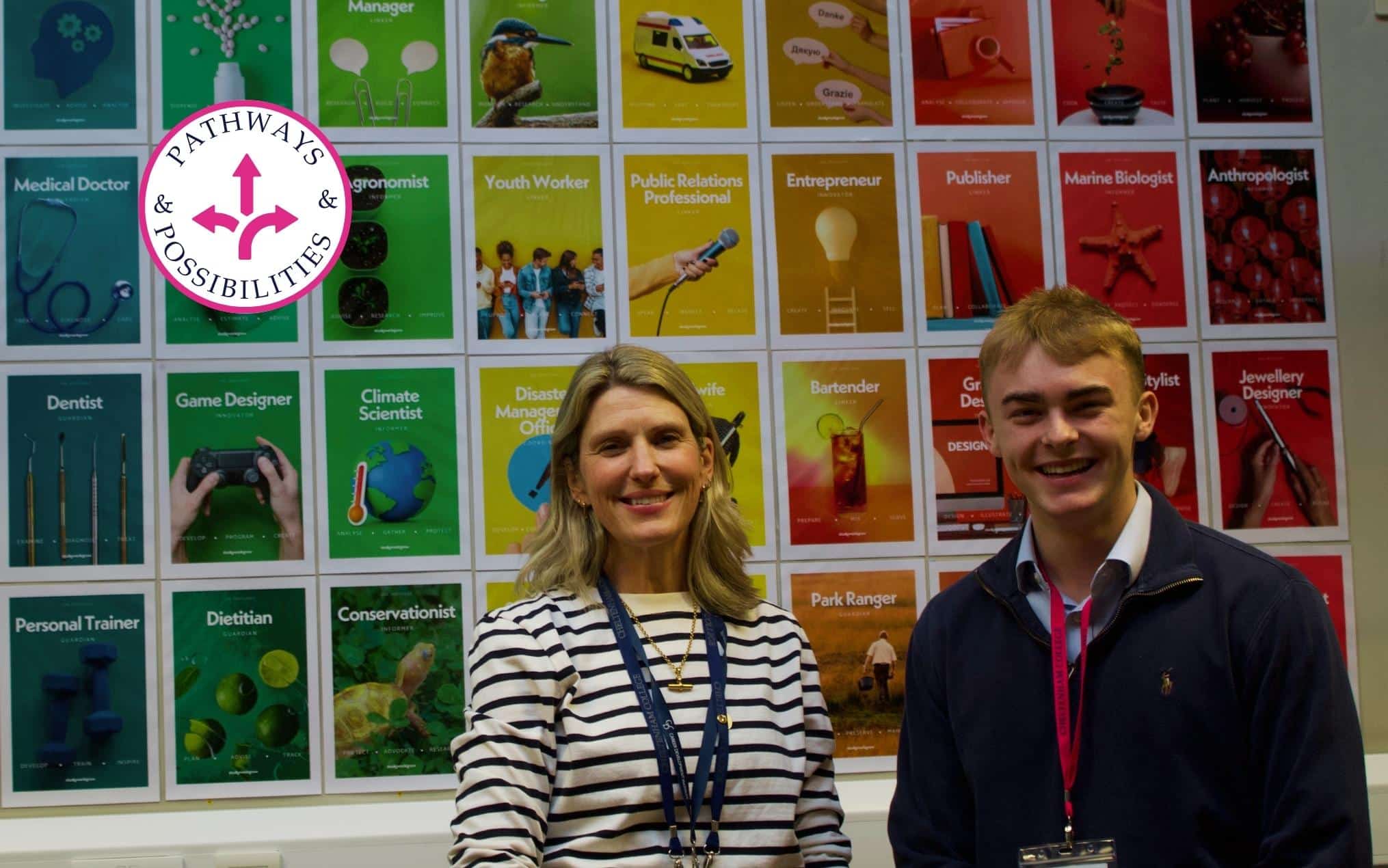
During his recent visit to the College, Max enjoyed catching up with three staff members who supported him throughout his journey: his tutor, Anna Cutts; his houseparent, Alex Naylor; and Rebecca Evans, Head of Higher Education and Careers, pictured below.
Our Pathways & Possibilities series celebrates the journeys of our pupils as they take their next steps beyond College, while supporting current pupils and parents with expert guidance along the way. Each week, we will share a mix of success stories and practical advice from our Higher Education and Careers team to help inspire and inform future pathways.
If you would like to learn more about Sixth Form at Cheltenham College, please click here.
If you would like to find out more about the College’s Higher Education & Careers department, please click here.